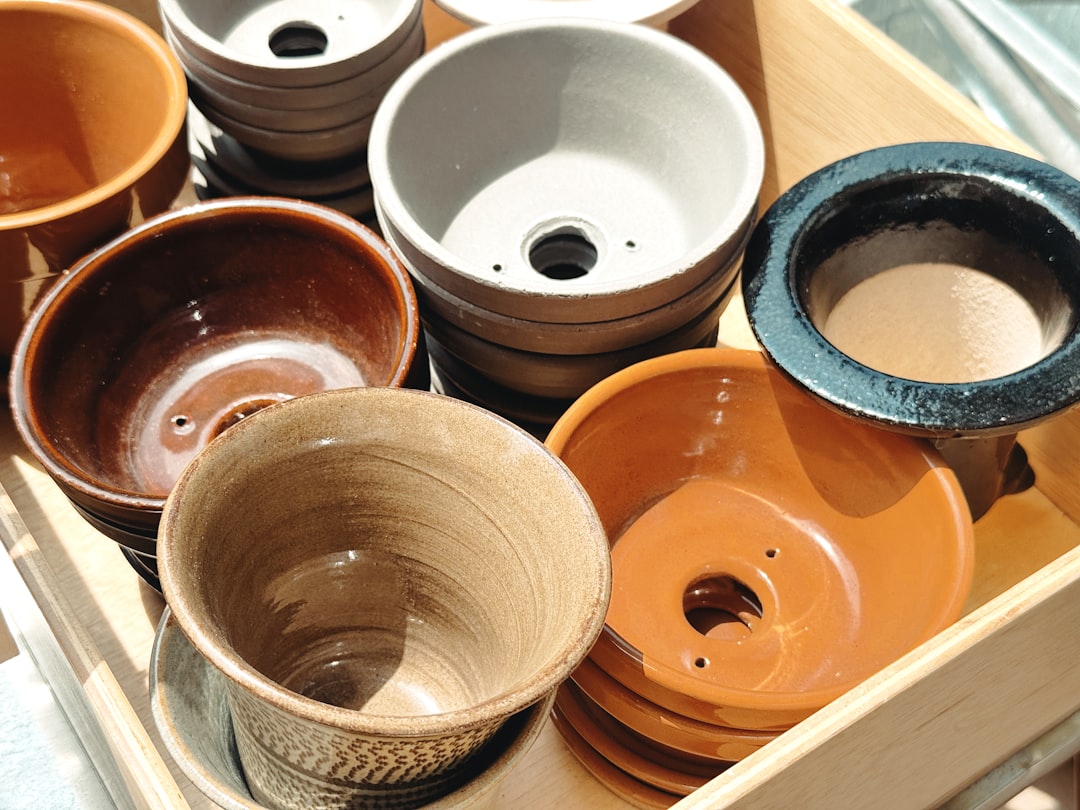
A cheap and satisfying place to buy plant pots is the same charity shop where you buy books. The stock rotates every week, the prices are usually £1 to £5 for pots that would cost £15 to £40 new, and every pot has already lived through winters that killed the failure-prone ones. What arrives on the shelf is the survivor pool.
That said, second-hand pots come with three specific issues that can turn a bargain into a mistake. This is what to check before you buy, how to clean whatever you bring home, and the two types of used pot to walk past no matter how cheap.
What to check before you buy
Two minutes of inspection saves you disappointment at home. Look for:
- The drainage hole is unobstructed. Turn the pot over. A drainage hole packed with old compost, root ball, or a broken clay disc means the previous plant died in it and the drainage failed. Bring a screwdriver or a stick to clear it before you decide.
- The rim is not chipped in more than one place. A single small chip is cosmetic; multiple chips mean the pot was dropped, and cracks may radiate down the wall that you cannot yet see. Terracotta and glazed ceramic both fail this way.
- No hairline cracks running down the wall. Hold the pot up to strong light and rotate it. Any thin lines from rim to base are structural cracks that will open with the first frost. Put it back.
- No white salt crust on the outside of unglazed terracotta. Salt bloom on old terracotta means the previous soil was heavily salted (tap water hardness, over-fertilisation) and the pot has absorbed those salts through the porous clay. Some plants tolerate this; many do not. Optional avoid, cleanable but effortful.
- The pot is not too heavy for the size. A 30 cm terracotta pot should weigh 3-5 kg. A ceramic glazed pot of similar size, 4-8 kg. Anything significantly heavier is usually a very old thick-walled make (fine) or waterlogged (very bad, indicates the pot has been holding water in a hidden crack).
What to definitely buy when you see them
- Old handmade terracotta. Look for uneven finishes, thicker walls, and no branding stamp on the base. British handmade terracotta from the 1970s-1990s is durable, frost-resistant, and now expensive new. Sneaks into charity shops constantly. £2-£5 for a pot that costs £30-£60 new.
- Substantial glazed ceramic pots. Especially the plain colours (dark green, cream, matte grey). Second-hand supply is high because they are heavy and people downsize. £3-£8 for £20-£50 new.
- Old planters and troughs. Cast iron, thick concrete, or stone troughs. Almost impossible to find affordably new. Charity shops sometimes have them at £5-£15 because carrying home is hard. Get a car.
- Vintage plastic pots from the 1970s-80s. Thicker plastic than modern lightweight versions, frost-resistant, often odd colours (dusky pink, avocado green) that photograph well. £0.50-£1.
What to walk past no matter how cheap
- Any pot showing radial cracks around the drainage hole. This is where mechanical stress concentrates. A crack here means the pot will split with the first significant load.
- Modern lightweight fibreglass or resin planters at a discount. If they are being donated to charity shops within a few years of purchase, they usually failed in some way (UV brittleness, cracked at joints). Look at the seller reviews of the same model online before committing.
How to clean second-hand pots safely
Almost every used pot benefits from a proper clean before use, mostly for disease control:
- Empty any residual soil out and knock the pot upside down to clear loose material.
- Scrub inside and out with a stiff brush and warm soapy water. Use standard washing-up liquid; nothing exotic.
- Rinse thoroughly.
- Sanitise: soak for 20 minutes in a solution of one part household bleach to nine parts water (a bathtub or large plastic tub works for big pots). This kills disease spores that plain washing does not.
- Rinse very thoroughly (bleach residue harms plants). Air dry for 24 hours before use.
For heavy salt bloom on terracotta, an additional soak in a 1:1 white vinegar and water solution for 30 minutes dissolves the salts. Rinse and dry.
Repairing minor damage
A few things are worth fixing rather than avoiding:
- Small rim chips on terracotta: file smooth with a coarse file and leave. The pot is still functional.
- A crack that has not yet fully split: for a valuable pot, a bead of clear silicone along the inside face of the crack (from the inside) buys you several more seasons. Not a permanent fix but honest for a project pot.
- A missing bottom disc in the drainage hole: put a small piece of broken pottery over the hole from inside before adding compost. Traditional and free.
The economics that surprise people
A serious container gardener spends £200-£500 on pots over the first three years of setting up. Buying second-hand can drop that to £50-£150 for equivalent quality, with the added benefit that older pots are usually better-made than modern equivalents. Over ten seasons of container growing, the savings compound into hundreds of pounds, most of which can go into better compost, better plants, or better tools.
Some of the best pots in our own garden are second-hand: three big terracotta olive-oil-style tubs (£4 each from a British Red Cross shop), a matched pair of glazed ceramic pots (£10 for both from an Age UK shop), and an assortment of vintage plastic that has survived a decade so far. Every one of them was inspected, cleaned, and put to work within a week of purchase.
Further reading
Two authoritative resources we recommend if you want to go deeper on this topic:
Frequently asked questions