Container size is a quietly decisive factor in whether a vegetable thrives or fails. It is also the question we are most often asked: how big does this pot really need to be? The answer is rarely the size printed on the seed packet, which tends to be wildly optimistic.
This guide collects the working sizes we use on our own balconies and small patios. They are not theoretical. They are what we have learned through three or four seasons of trying smaller and watching the plant disappoint, then trying larger and watching it relax.
The principle: depth matters more than width
Most root systems on common vegetables go deeper than they go wide. A shallow but wide trough will hold lettuce nicely but will frustrate a tomato. When in doubt, choose the taller pot rather than the wider one for fruiting and root crops.
Salad greens, lettuce, rocket, mizuna
These crops are forgiving. A 20 cm deep window box or trough is plenty. Width matters more than depth here because you want to sow a long row of seeds. Keep the soil consistently moist and cut leaves when they are 8 to 12 cm tall.
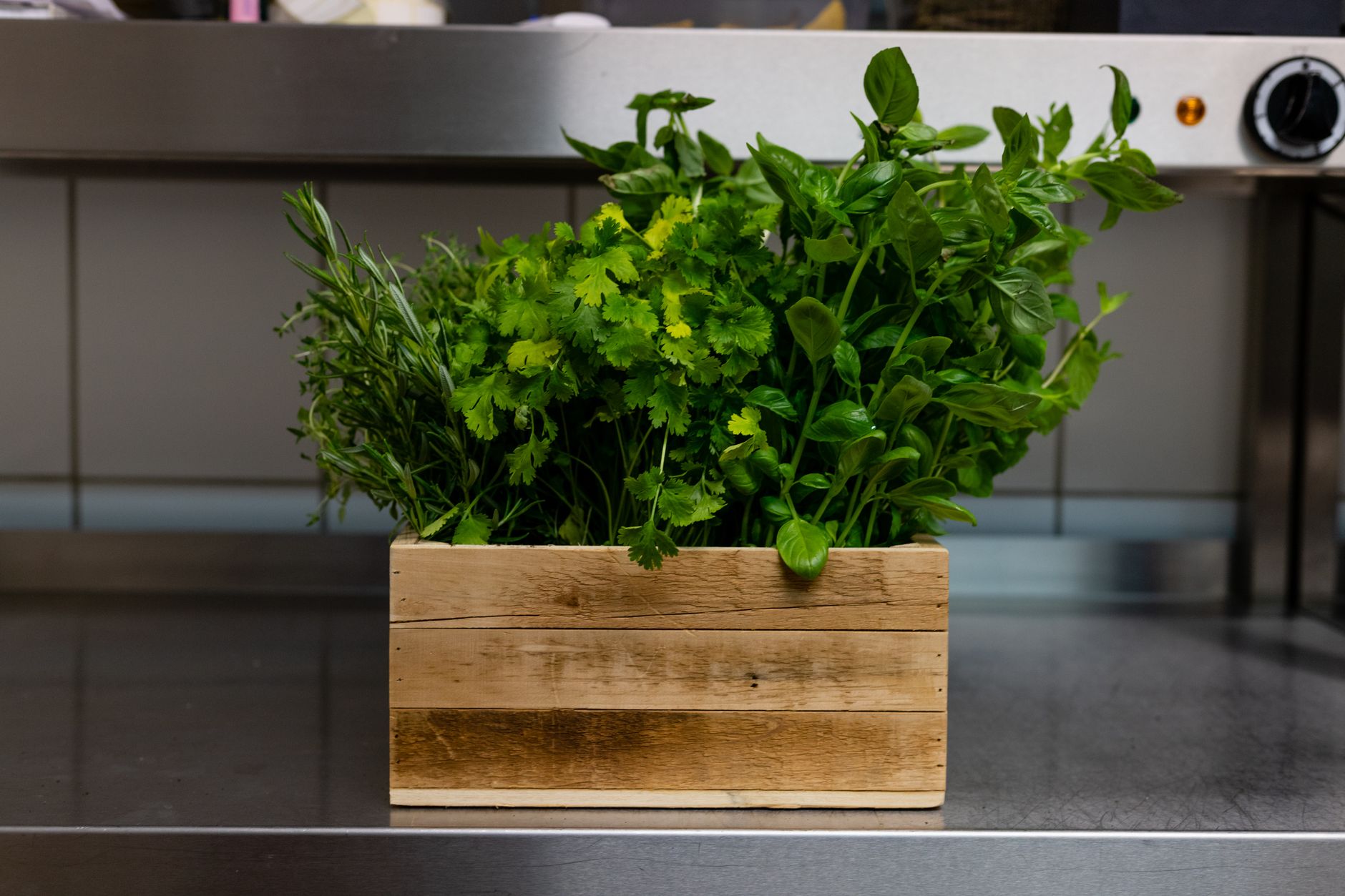
Soft herbs (basil, parsley, coriander, dill)
A single basil plant likes a 20 to 25 cm wide pot, 22 cm deep. Parsley is greedy and prefers 25 to 30 cm wide. Coriander bolts in any pot if stressed, so give it a roomy 25 cm pot, partial shade, and resow every three weeks rather than expecting one plant to last a season.
Mediterranean herbs (rosemary, thyme, sage, oregano)
These herbs do not want generous pots. A 25 cm pot is the working sweet spot. Drainage matters more than soil volume. Use a gritty soil mix and let it dry between waterings. A pot too large stays too wet and the herbs sulk.
Tomatoes
Bush or determinate tomatoes
30 to 35 cm wide, 30 cm deep at minimum. Tumbling cherry varieties can fit in a 30 cm hanging basket if you water twice a day in summer.
Indeterminate (vining) tomatoes
40 to 50 cm wide, 40 cm deep is the realistic minimum. Larger is genuinely better. A 60 cm pot will give you noticeably more fruit because the root system has the volume to support heavy production.
Chillies and peppers
30 cm wide, 30 cm deep for compact chillies. Larger sweet peppers want 40 cm. Chillies tolerate small pots better than tomatoes do, which makes them a forgiving choice for tight balconies.
Aubergines (eggplants)
40 cm wide, 40 cm deep at minimum. Aubergines are hungry. They will quietly fail in anything smaller. Feed weekly with a balanced liquid feed once flowers appear.
Root crops
Radishes and small carrots
25 cm deep trough is enough. Pick short or round carrot varieties such as Paris Market types.
Standard carrots
30 to 35 cm deep. Worthwhile only if you really want carrots.
Spring onions and leeks
Very tolerant. 20 cm deep trough or pot. Easy and quick.
Squashes, courgettes and cucumbers
These are demanding. Courgettes need a 50 cm wide, 40 cm deep pot per plant. Cucumbers want 45 cm wide. Squashes are usually too big for balconies but a compact variety such as Sunburst will fit in a 50 cm pot.
Beans, peas
Climbing beans want a 35 cm wide, 35 cm deep pot with a sturdy support frame. Dwarf French beans are happier and fit in a 25 cm pot. Peas like cooler weather and tolerate a 25 cm trough.
A quick budget tip
Large terracotta pots are beautiful and expensive. Black plastic nursery pots in 30 to 50 cm sizes work just as well and disappear behind the plant within a month. If you want pretty, use the terracotta for the front-of-balcony herbs and put the production tomatoes in the cheaper black pots behind them.
Further reading
Two authoritative resources we recommend if you want to go deeper on this topic:
Frequently asked questions