Grow lights are the gateway equipment of indoor growing. They are also where most beginners overspend, overspec, or buy something that does not match their actual room. The marketing reads as if you need a 600W professional fixture to grow herbs on a kitchen counter, which is roughly five times more light than the herbs need and ten times more than the electricity bill will gracefully accept.
This guide walks through what a small apartment actually needs, what to ignore in the marketing, and how to set up a useful indoor light station for under $100.
How much light you actually need
For most kitchen-scale indoor growing (herbs, lettuce, microgreens), 20-30 watts of modern LED lighting per square foot is enough. For fruiting plants (chilli, small tomato), 30-50W per square foot. Anything over that is professional-scale and not necessary for home use.
Types of grow light
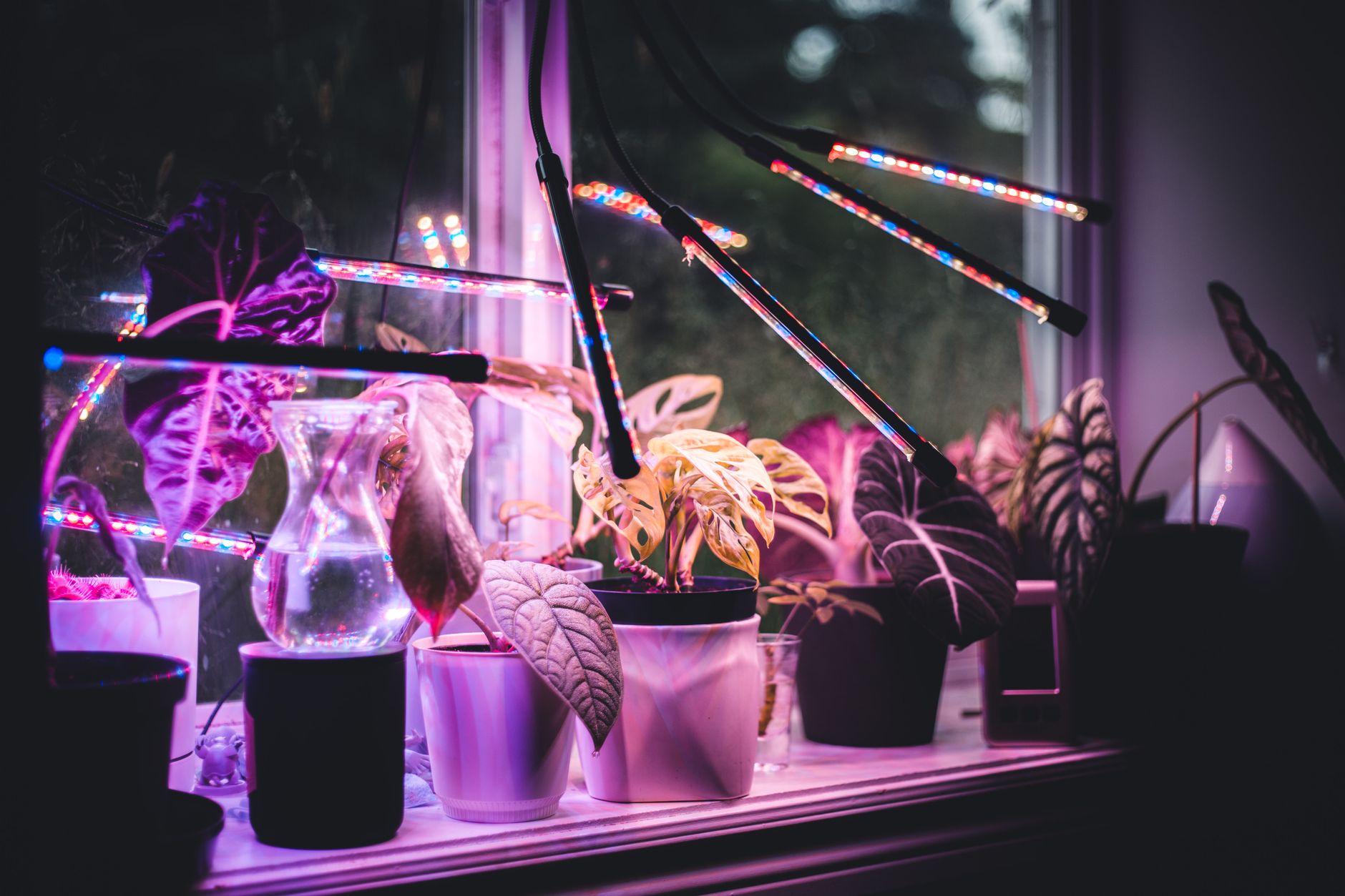
LED strip lights
The cheapest entry point. T5 or T8-style LED strips designed for plant growth, $20-$40 each. Excellent for shelves of seedlings or herbs.
LED panel lights
The most common consumer option. 20-50W panels, $40-$120. Good for single trays or small shelf areas.
Bulb-and-clamp LED
A single LED grow bulb in a clamp lamp from a hardware store. Cheapest of all, $15-$30. Excellent for one or two pots on a desk.
Full-spectrum quantum boards
Professional grade. Overkill for most home use. Useful only if you are growing fruiting plants in a closed cabinet.
Reading the spec sheet honestly
Watch out for confusing marketing claims. The ones that matter:
- Actual wattage drawn (not ‘equivalent’ wattage).
- PPFD or μmol/m²/s rating at a stated distance.
- Spectrum: full-spectrum or 3000K+5000K mix is fine for general growing.
- Heat dissipation: Look for aluminium heat sinks; cheap lights overheat.
Ignore:
- Inflated ‘equivalent’ wattages.
- Number of LED diodes (largely meaningless on its own).
- Vague ‘full spectrum’ claims without proof.
- Lifetime hour claims; LEDs almost always outlast their drivers.
How far above the plants
Most home LED lights work at 20-40 cm above the canopy. Too close and you scorch leaves; too far and the plants stretch.
Watch the plants. If they look leggy or pale, the light is too far or too weak. If they look stunted or scorched, too close or too strong.
How long to run the light
- Salad greens, herbs: 14-16 hours a day.
- Fruiting plants in vegetative growth: 14-16 hours.
- Fruiting plants in flowering: 12 hours on, 12 off.
- Microgreens: 12-14 hours.
A simple plug-in timer ($10) automates this and dramatically improves results.
A simple home setup we recommend
- One LED panel rated 30-40W actual draw, around $60.
- An adjustable hanging frame or a metal wire-shelf rack ($30).
- A digital timer ($10).
- One seed-starting tray with drainage and dome ($15).
Total cost roughly $100-$120 for a station that produces salad greens, herbs and seedlings year-round.
Further reading
Two authoritative resources we recommend if you want to go deeper on this topic:
Frequently asked questions