A small homestead needs a small workshop. The phrase “workshop” might suggest a full carpentry setup, but on a real homestead it is more often a single corner of a shed with a sturdy bench, a vice, two or three hand tools, and the discipline to put things back.
This guide walks through what a working repair corner needs, what we actually fix in ours, and how to set up the space so that small jobs get done before they grow into expensive ones.
The bench
A bench needs to be heavy enough not to move when you push hard against it, flat enough to draw lines on, and ideally with a vice bolted near one corner.
- Old kitchen table: free, often plenty sturdy.
- Wood + concrete blocks: a 4-foot scaffold plank on two breeze blocks works.
- Proper workbench: $150-$400, lasts a lifetime.
The vice
An ordinary 4-6 inch metalwork vice bolted to one corner of the bench transforms the space. You can clamp anything from sharpening a spade blade to gluing a chair leg. $40-$80 for a good one.
The starter hand tools
- Cordless drill with a basic bit set.
- Adjustable spanner and a small set of fixed spanners.
- Pliers (regular and needle-nose).
- Hammer and rubber mallet.
- Wood and metal files (a coarse and fine of each).
- Sharpening stone (medium grit).
- Hacksaw and a small wood saw.
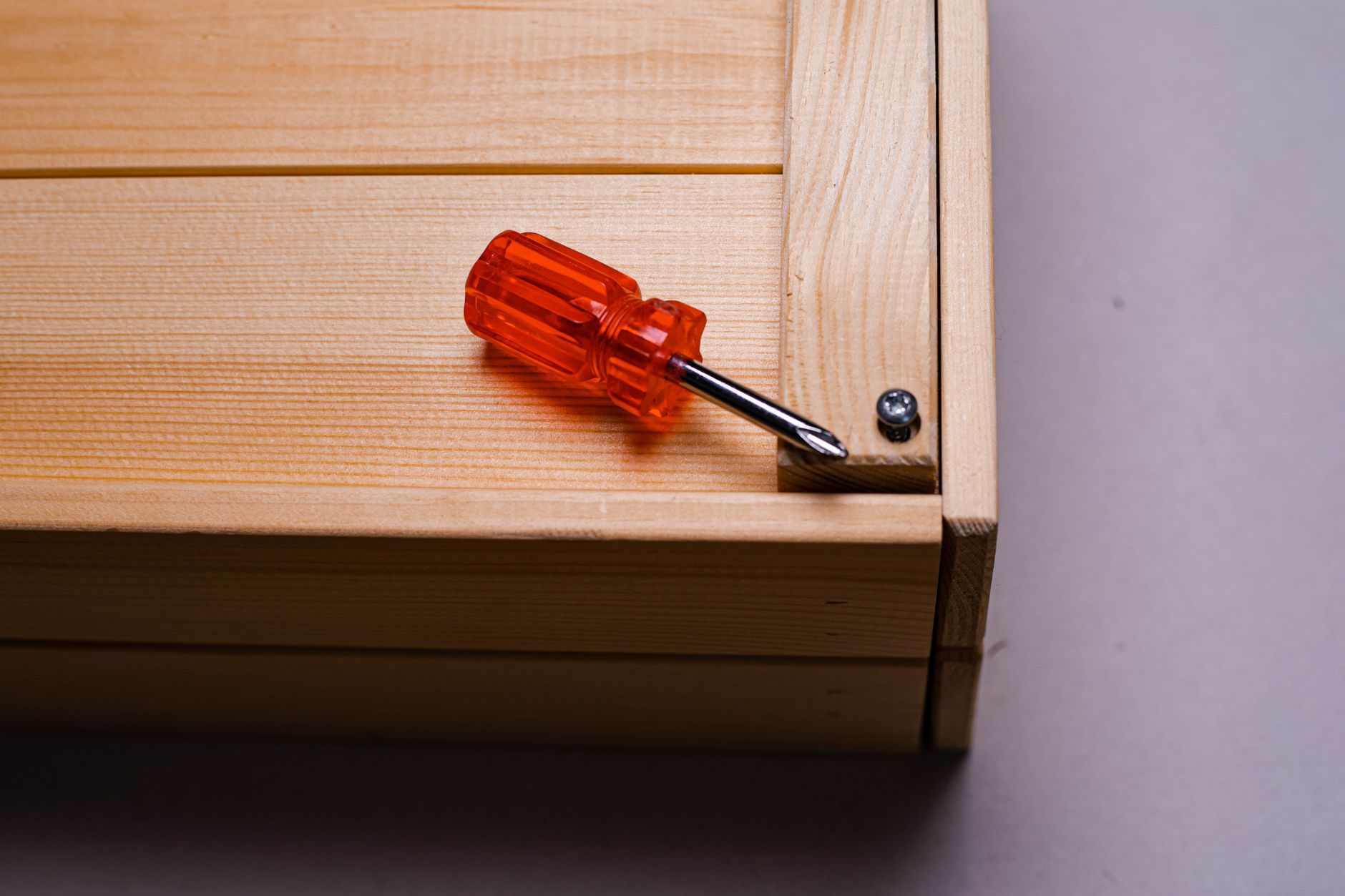
- Screwdrivers (Philips and flathead, three sizes each).
- Tape measure, pencil, square.
That is roughly $80-$150 in mid-range tools and covers 90% of homestead repair tasks.
What we have repaired in our workshop corner
- A wheelbarrow handle that split.
- Three pairs of secateurs (cleaned and rebuilt).
- A garden tap that was leaking at the connector.
- A chicken-coop hinge.
- The kitchen blender (a stuck blade).
- Various wooden tool handles needing replacement.
- Cordless drill battery (just the cells, replaced).
- A bicycle tyre.
Storage and organisation
- A pegboard above the bench for everyday tools.
- Small clear bins for screws, nails, washers (labelled).
- A drawer or box for less-used items.
- A magnetic strip near the vice for spanners.
- Adequate light: a single LED strip overhead is enough.
Safety basics
- Safety glasses near the vice (use them).
- Cut-resistant glove for sharpening.
- First aid kit in the workshop, separate from house kit.
- Fire extinguisher within reach if you do any soldering.
- A clear workspace before starting; don’t fix things on a cluttered bench.
When to refuse a repair
Not everything is worth repairing. The honest list:
- Cheap plastic items (cost more to fix than to replace).
- Electronics beyond basic battery replacement.
- Anything involving compressed gas (regulators, propane).
- Tools where replacement parts are genuinely unavailable.
Knowing when to stop saves time and frustration.
Further reading
Two authoritative resources we recommend if you want to go deeper on this topic:
Frequently asked questions