We have a hand tool drawer in the shed where every single item has been used in the last twelve months. Behind it there is another drawer with items that have not been touched in years. The contents of the second drawer were almost all bought new during enthusiastic phases. The contents of the first were mostly inherited, gifted, or bought from secondhand sources after careful thought.
This is a list of the hand tools we would buy again, in the order we would buy them, with a small note on what makes each one worth keeping for the next twenty years.
One: a good spade
Forged, not stamped. Stainless or carbon steel. Solid ash handle. Sharpened twice a year. A good spade lasts a working lifetime. Cheap spades bend within a season.
- Look for D-handle for tight digging.
- Long-handled (T-handle) for general digging in soft soil.
- Try in the shop before buying. Hold it, lift it, feel where the balance sits.
Two: a digging fork
Four flat tines. Used for breaking compacted soil, lifting root vegetables and turning a compost heap. We use ours more than the spade in clay soils.
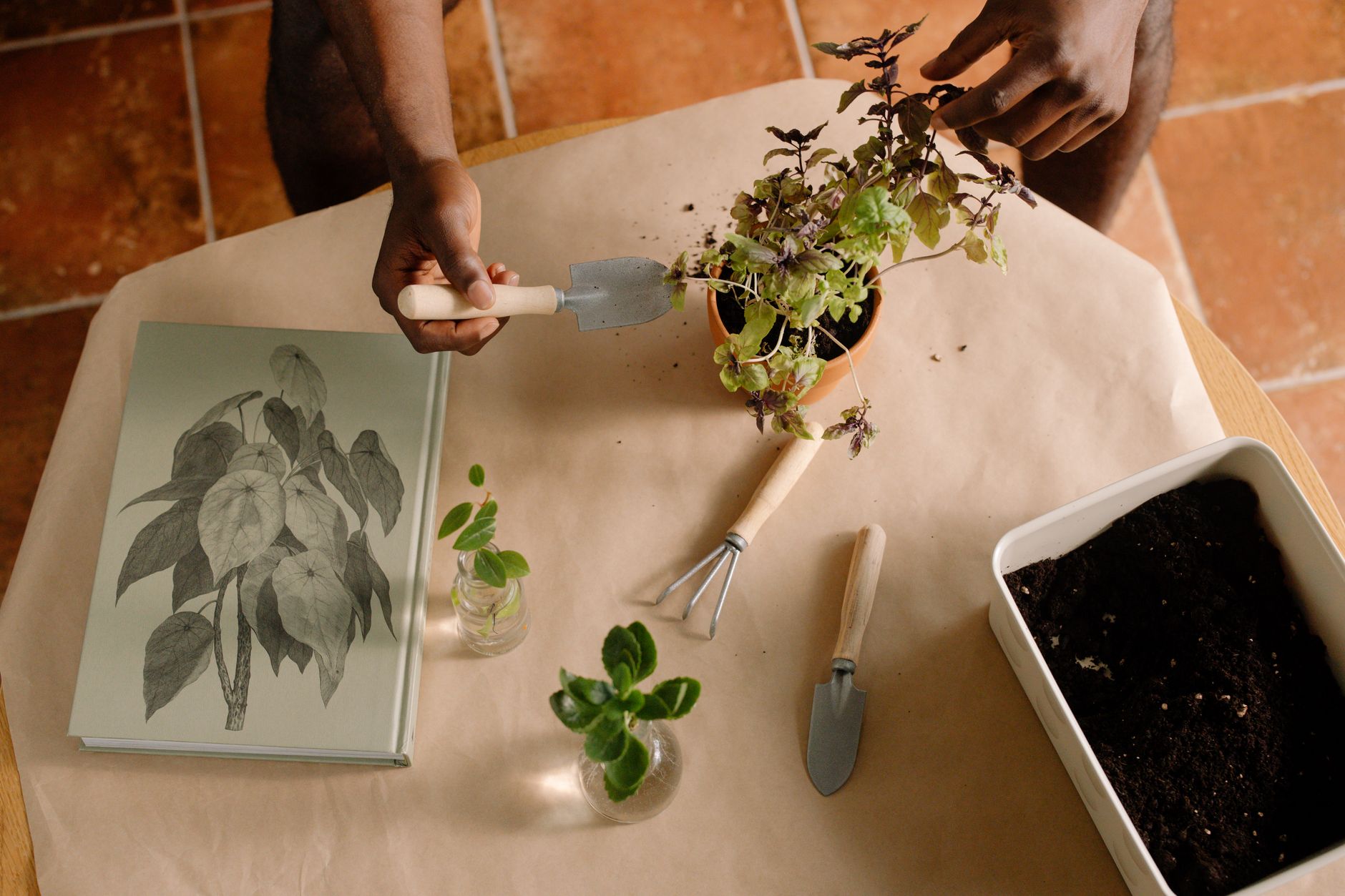
Three: hand trowel
Forged from a single piece of metal, with a clearly defined handle joint. Plastic-handled trowels split within three seasons. A stainless forged trowel lasts decades.
Four: secateurs
Bypass type for most pruning. Felco Number 2 are the bench standard and rebuildable, but more affordable equivalents from companies like ARS or Niwaki are excellent. Sharpen them regularly. A pair of well-maintained secateurs lasts thirty years.
Five: a hand sickle or grass hook
For cutting overgrown grass, harvesting cover crops, and a hundred other small tasks. A Japanese kama (hand sickle) is light, sharp, and lasts a lifetime if kept dry.
Six: a sharpening stone
A simple double-sided stone (coarse and fine) for keeping spade, trowel, hoe and secateurs sharp. A sharp tool is half the work of a dull one.
Seven: a hoe (Dutch or stirrup type)
For shallow weeding without bending. Saves your back over a season. The Dutch hoe (push-and-pull) is more forgiving than the draw hoe for beginners.
Eight: a wheelbarrow or garden cart
Not strictly hand tools but in the same category of long-term investment. A solid wheelbarrow with a pneumatic tyre lasts twenty years. A cheap plastic one cracks within three.
Tools we would not recommend buying new
- Powered cultivators (rent for occasional use).
- Large hedge trimmers (most gardens don’t need them).
- Electric grass shears (a sharp hand pair works better).
- Specialty Japanese pruning saws unless you have a specific tree need.
Maintenance habits that triple tool life
- Wipe blades dry after every use.
- Oil metal tools once a month with linseed or 3-in-1.
- Sharpen edges every couple of months in active use.
- Treat wooden handles with linseed oil once a year.
- Store under cover, not propped against a fence in the rain.
Further reading
Two authoritative resources we recommend if you want to go deeper on this topic:
Frequently asked questions