There is no perfect raised bed material. There are useful tradeoffs, honest limitations, and a few materials we would gently warn beginners away from. After building, buying and helping to install probably forty raised beds across our own gardens and friends’ yards, we have settled into a small handful of materials we would recommend without reservation.
This guide walks through the practical reality of cedar, untreated pine, galvanised steel, recycled brick, woven willow and a few alternative materials. It tells you what each lasts, what each costs, and what each is genuinely good at.
Western red cedar
The traditional and still our quiet favourite. Naturally rot-resistant, doesn’t need treating, gradually weathers to a soft silver-grey. A well-built cedar bed lasts 10 to 15 years before the boards near the soil line begin to soften.
- Lifespan: 10-15 years.
- Cost: Mid to high (varies widely by region).
- Best for: Vegetable beds where you want a calm, settled aesthetic.
- Downsides: Cost. Cedar prices have climbed steadily over the last decade.
Untreated pine or larch
The budget option. Untreated softwood beds last roughly 5 to 7 years before the boards rot at the soil line. Cheap, easy to source, easy to replace.
Avoid pressure-treated lumber for edible beds despite some recent treatments being safer. The chemistry is debated and the precautionary instinct is to keep treated wood out of food-growing beds.
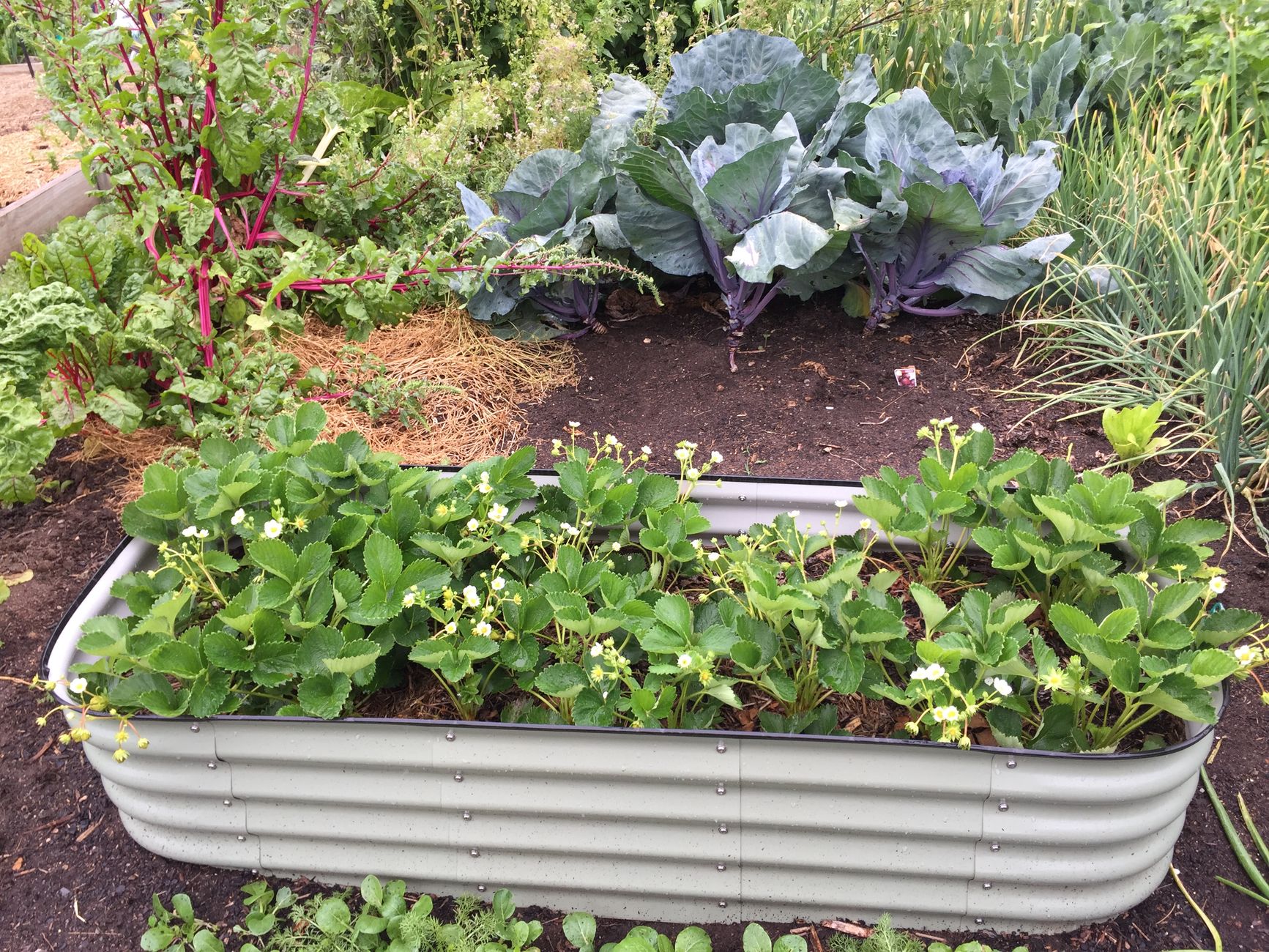
Galvanised steel (corrugated stock-tank style)
Increasingly popular and quite useful. Long-lasting, modern aesthetic, no rot. Watch for two issues: heat retention in midsummer (soil temperatures rise quickly in steel beds in hot climates), and slight zinc leaching from cut edges (negligible in practice for most edibles).
Recycled brick or block
If you have access to second-hand brick (skip days, demolition sites, building reuse centres), dry-stacking or mortar-laying a low brick wall makes an essentially permanent raised bed. Free or cheap, attractive, lasts forever.
Drawback: heavy, hard to move, hard to alter once installed. Best for committed permanent layouts.
Woven willow or hazel
Beautiful, traditional, surprisingly affordable if you weave them yourself or buy second-hand. Lifespan 4 to 6 years, slightly less in very wet climates.
Not for serious production. Best for ornamental edges to vegetable beds in well-loved gardens.
Composite plastic lumber
Recycled plastic boards. Long-lasting, low maintenance, and increasingly available. Some products are excellent, others sag in heat over the years. Look for boards specifically rated for raised-bed use.
Materials to avoid
- Old railway sleepers (often treated with creosote).
- Pressure-treated lumber, particularly older treatments.
- Tyres (heavy metal concerns).
- Painted reclaimed wood unless you know the paint history.
Bed dimensions worth using
- Width: No more than 1.2 m. You should be able to reach the middle without stepping in.
- Length: 1.5 to 3 m is the practical range. Longer beds become hard to walk around.
- Depth: 30 cm for leafy crops, 45 cm for root vegetables and substantial production.
How we would build a first raised bed
For a first bed, 2 m long, 1.2 m wide, 40 cm deep, in untreated pine or larch. Total cost in our region is roughly $80-$120 for boards, fasteners and a few brackets. The bed will last 6 to 8 years, by which point you will know exactly what you actually want and can invest in a cedar replacement.
Further reading
Two authoritative resources we recommend if you want to go deeper on this topic:
Frequently asked questions