Vertical growing is the headline answer to small-space food production. The reality is more interesting and slightly more complicated. Trellises, supports, frames and arches let a small garden produce surprising amounts of food vertically. They also create a lot of opportunities for over-complicated, fragile, or aesthetically distracting structures.
This guide walks through trellis systems that actually work on small balconies and yards, what to grow on them, and how to build supports that last more than one season.
Tomatoes: stakes versus cages
Single-stake training
Best for indeterminate (vining) varieties. Stake 1.5-2 m tall pushed deep into the pot or soil. Tie the main stem every 20 cm with soft twine. Pinch out side shoots.
Cage
Best for determinate (bush) varieties. The cage supports the bushy growth without much pruning. Cheap wire cages bend in heavy fruit; a sturdy reinforcing-mesh cage is better.
Beans and peas
Climbing beans and peas want vertical structures 2-2.5 m tall. Options:
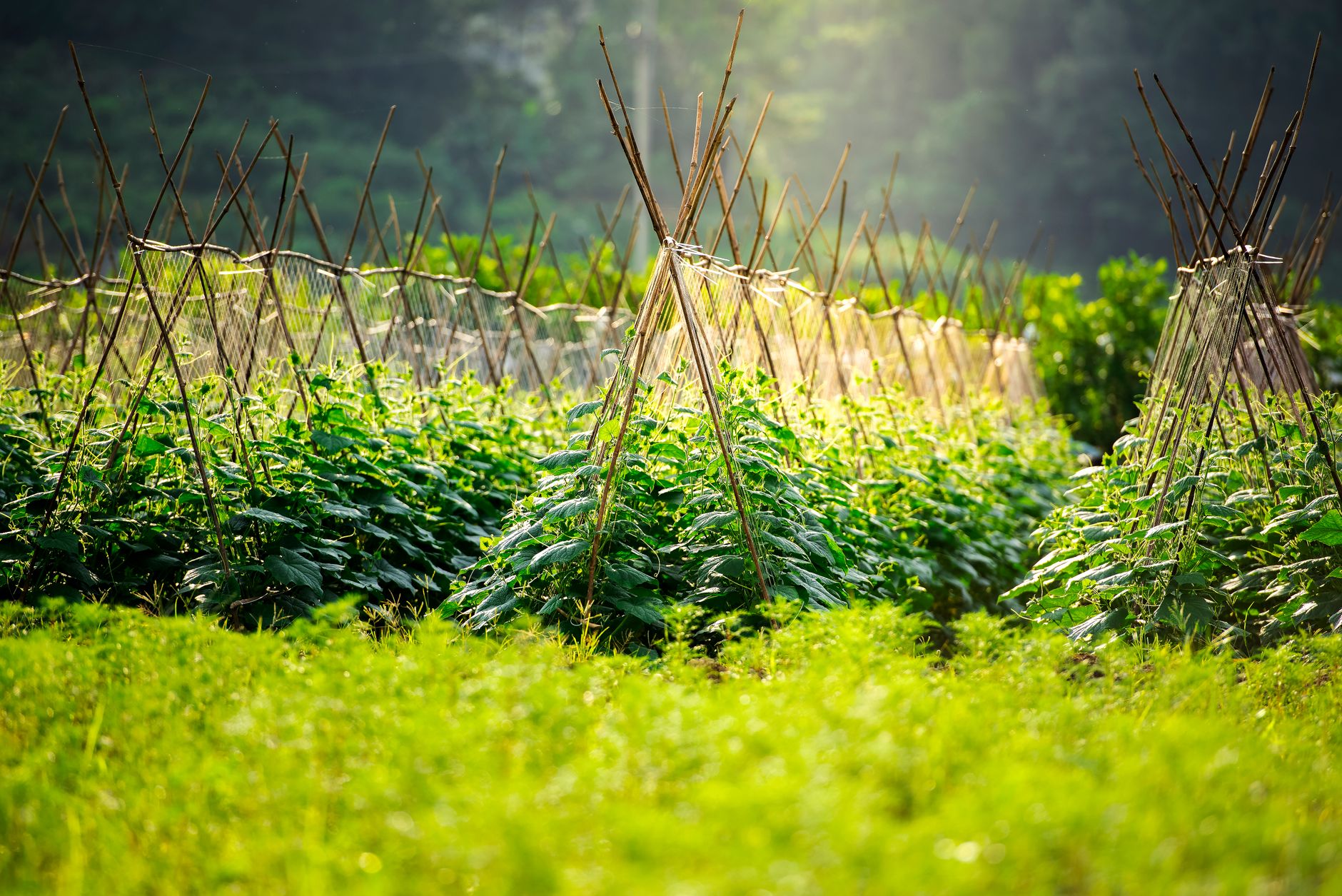
- Three to five bamboo canes tied at the top (wigwam).
- Two parallel canes with horizontal strings or netting between.
- A wall-mounted trellis of wire or wood lattice.
- An A-frame structure straddling a raised bed.
Cucumbers and squashes
Cucumbers train upward beautifully if given a sturdy frame. Climbing varieties (rather than bush) suit vertical growing. Provide a 2 m frame with horizontal wires every 30 cm. Tie the main stem and let tendrils grasp.
Small squashes (gem squash, cucamelons) work on similar frames. Larger butternut and pumpkin types are too heavy for most vertical structures.
Materials
Bamboo canes
Cheap, light, easy to replace. Last 2-3 seasons. Rot at the soil line first.
Hazel rods
Traditional, beautiful, slightly more durable than bamboo. Forager friendly.
Galvanised pipe
Heavy-duty, permanent, slightly industrial looking. Lasts 20+ years.
Reclaimed pallet wood
Free, character-rich, fine for low-stress frames. Limited lifespan outdoors.
Welded mesh (cattle panel)
Excellent for arches and serious support. Long-lasting. Mid-range cost.
A simple A-frame in a raised bed
- Drive two pairs of bamboo canes diagonally into opposite long sides of the bed.
- Lash them together at the top with twine or cable ties.
- Tie horizontal canes between for support every 30 cm.
- Plant beans, peas or cucumbers at the base of each leg.
- Disassemble and store at the end of the season.
Mistakes
- Building too late. Install supports before the plants need them.
- Underestimating weight. A tomato plant in fruit weighs 5-8 kg.
- Tying with wire. It cuts stems. Use soft twine or strips of old t-shirt.
- Building in line with wind. A south-facing tall trellis catches summer storms.
Aesthetic considerations
A trellis is structural infrastructure for the season. Most look untidy in winter when the plants come down. Either build attractive permanent structures (hazel, hardwood frame, metal arch) or build cheap seasonal structures (bamboo, cane) and remove them in autumn.
Further reading
Two authoritative resources we recommend if you want to go deeper on this topic:
Frequently asked questions