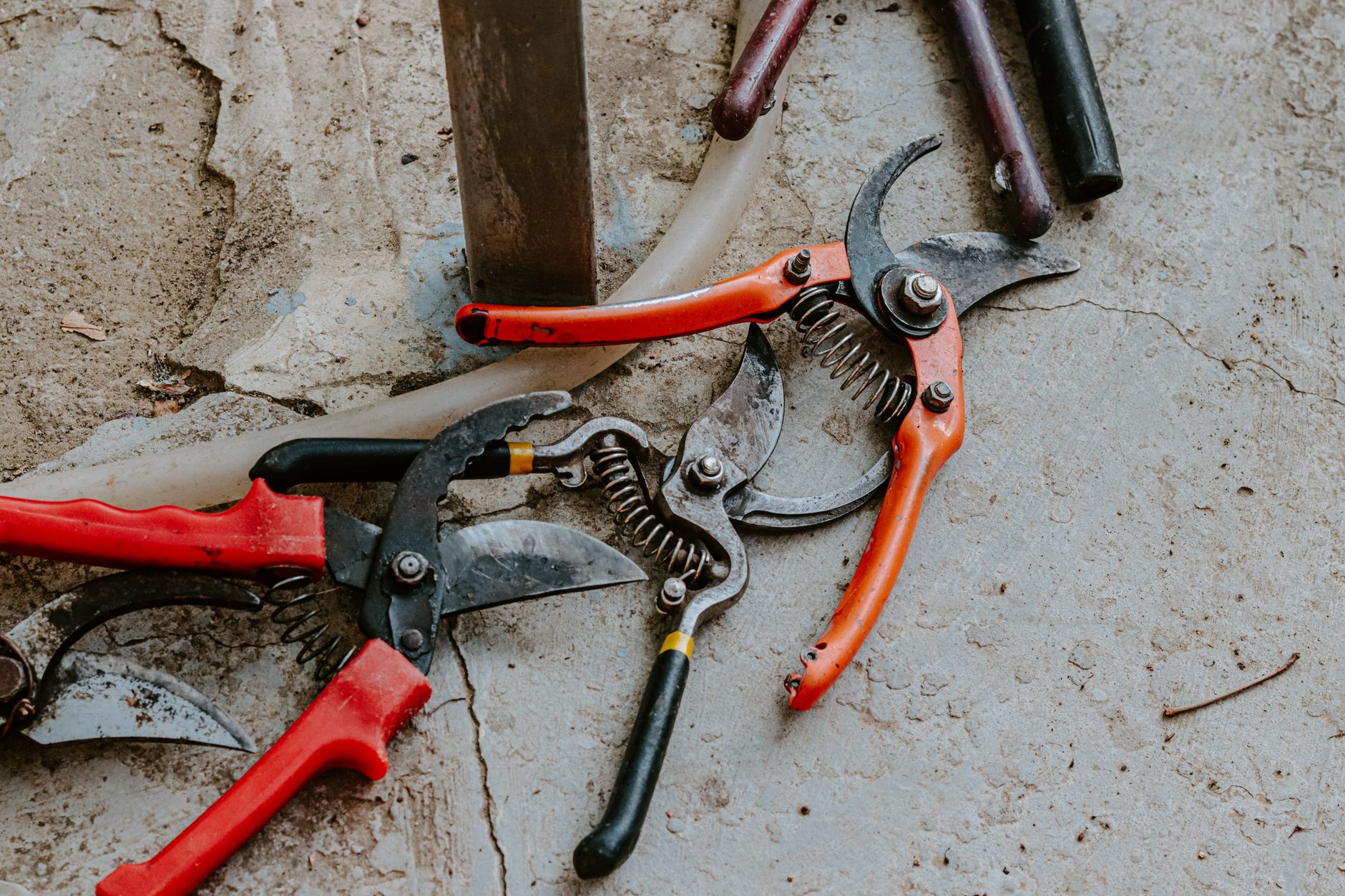
A good pair of secateurs is one of those rare tools whose price-to-life ratio is genuinely impressive. A $90 pair, kept sharp and lubricated, will outlast forty $20 pairs. Over a working life this is a $1000 saving and an immeasurable improvement in everyday gardening.
This guide walks through what to look for, which brands have proven themselves over decades, and how to keep a single pair for the next twenty years.
Bypass versus anvil
Bypass
Two curved blades that cross like scissors. Best for live, green wood up to about 25 mm. The cut is clean and the plant heals well. This is the type to buy for general pruning.
Anvil
A single blade closing onto a flat surface. Better for dead, dry wood. Crushes living stems, so not ideal for pruning growing plants.
What to look for
- Rebuildable. Replacement blades, springs, bolts available from the manufacturer.
- Forged blade, not stamped sheet metal.
- Adjustable tension bolt on the pivot.
- Comfortable handle shape for your hand size.
- Catch mechanism that you can operate one-handed.
Brands with track records
Felco (Switzerland)
The bench standard. Felco Number 2 is the classic for most adult hands. Number 6 for smaller hands. Number 8 for left-handed. Every part is replaceable.
ARS (Japan)
Excellent steel, often slightly lighter than Felco. ARS HP-VS-8R is a frequently recommended model.
Niwaki (Japan / UK)
Beautiful tools, brilliant for ornamental work. Slightly more delicate edge than Felco; better for fine work than rough hedge cutting.
Bahco (Sweden)
More affordable than the top tier, still well-built. Bahco PG-12 is a reliable budget-friendly option.
Care that doubles the life
- Wipe blades dry after every use.
- Apply a drop of light machine oil to the pivot once a week.
- Sharpen on a fine stone every 30-50 cuts of woody material.
- Disassemble fully once a year to clean sap from the pivot.
- Replace the blade rather than the whole tool when it eventually wears out.
Sharpening: the simple method
You only sharpen the cutting blade (the outside, beveled edge), not the anvil-side blade. Use a fine diamond file or whetstone. Hold at the existing bevel angle, roughly 20 degrees from flat. Make 6-8 strokes from inside outward. Wipe clean.
When to replace versus repair
Almost never replace. The Felco I am holding while writing this is fifteen years old and on its second blade. The handles, springs, bolts and pivot are original. Once you find a pair that fits your hand, that pair becomes yours for life.
Further reading
Two authoritative resources we recommend if you want to go deeper on this topic:
Frequently asked questions