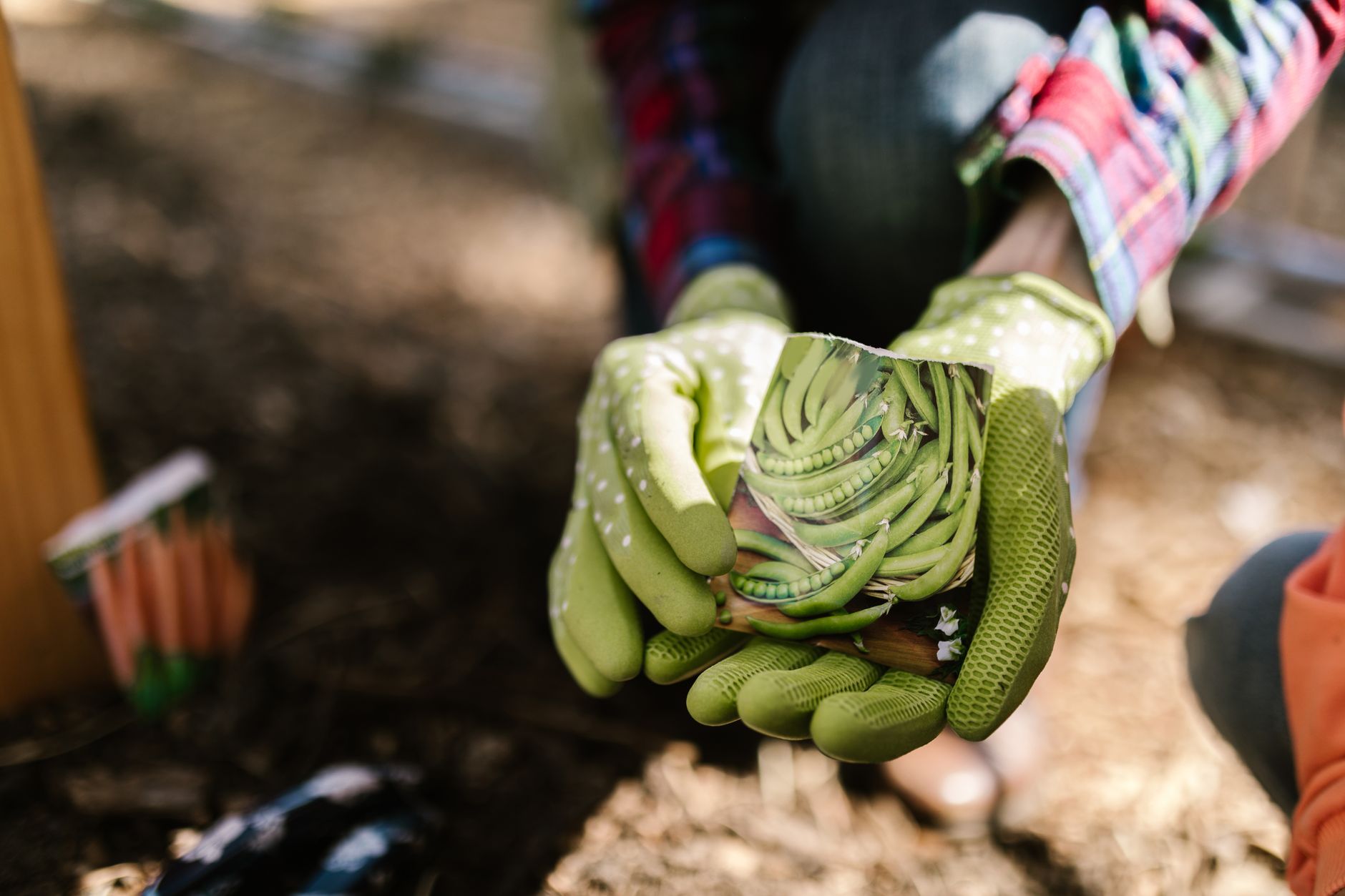
A seed packet has more information on it than most new gardeners realise, and a lot of that information is presented in a small typeface with abbreviated terms that mean nothing to a beginner. This is unfortunate because the labels are usually accurate and useful. Decoding them is a fifteen-minute exercise that saves you months of guesswork.
This guide is a calm walkthrough of every common element on a seed packet, what it actually means in practice, and which bits to ignore unless you are growing professionally.
Variety name
The headline name (“Sungold”, “Black Krim”, “Pak Choi Joi Choi”) is the variety. It matters because varieties differ wildly in size, days to maturity, disease resistance and flavour. “Tomato” on its own does not tell you whether the plant will reach 40 cm or 2 metres.
Days to maturity
A number like “70 days” tells you how long from planting (sometimes from sowing, sometimes from transplant – read carefully) to first harvest. It assumes ideal conditions, which means your real-world number will often be 10-20% longer.
Sun requirements
Usually shown as icons: full sun, partial sun, partial shade. See our guide on reading sun patterns for working definitions of these terms.
Spacing and depth
Two numbers, often presented as “Sow 1 cm deep, thin to 25 cm apart.” The first is how deep to plant the seed. The second is how far apart the mature plants will sit. For containers, you can often plant slightly closer than the packet suggests because container plants stay more compact.
Hardiness or zone information
Tells you which climates the variety tolerates. Less useful for annual crops (which you replant each year) and more useful for perennials.
Open-pollinated, heirloom, F1 hybrid
Open-pollinated
Saves seed reliably from year to year. Older, often regional varieties.
Heirloom
A specific subset of open-pollinated, usually with documented history before 1950 or 1960.
F1 hybrid
First-generation cross between two parent lines. Strong, uniform plants. Saved seeds will not produce the same plant next year, so you buy fresh seed each season.
Days to germination
Roughly how long between sowing and the first green sprout appearing. Useful for not panicking when carrots take 14 days. Some seeds (parsley, chillies, parsnips) take three weeks to germinate even under good conditions.
Packed for / sell-by date
Seeds are usually viable for at least two years past the printed date if stored cool and dry. The date is a marketing safety margin, not a hard expiry.
Disease-resistance codes
Letters after a variety name like “VFNT” indicate resistance to specific diseases (Verticillium, Fusarium, Nematodes, Tobacco mosaic virus). For container growing, most diseases are uncommon, so these codes are less important than for ground growing.
What to skip on first reading
- Vague claims like “high-yielding” or “sweet flavour”. Most varieties claim these.
- Awards (“AAS Winner”). Nice but not decisive.
- Detailed pest information unless you have already experienced that pest.
Further reading
Two authoritative resources we recommend if you want to go deeper on this topic:
Frequently asked questions